

How to improve longevity: strategies and supplements
TL;DR:
- Maintaining daily movement, a plant-based diet, and strong social connections are the most effective strategies for healthy aging after 40. Supplements like vitamin D and multivitamins can support deficiencies but do not replace foundational lifestyle habits. Consistent, ordinary actions over decades, such as regular exercise and nurturing relationships, are key to long-term vitality and longevity.
Reaching your 40s brings a quiet but powerful shift in perspective. The choices you make now, from what you eat to how often you move, carry real weight for your future vitality. Research into healthy ageing confirms that the gap between simply growing older and thriving through later decades is largely shaped by daily habits, not genetics alone. This guide covers the evidence on lifestyle foundations, the realistic role of supplements, and practical steps to help you build a longer, more vibrant healthspan starting today.
Table of Contents
- Understanding the foundations of longevity
- Build the essential habits: movement, diet, and connections
- The evidence on supplements: supportive or optional?
- Troubleshooting: overcoming common longevity roadblocks
- A new perspective: why longevity is about the everyday, not the extraordinary
- Take the next step towards healthy longevity
- Frequently asked questions
Key Takeaways
| Point | Details |
|---|---|
| Lifestyle matters most | Regular movement, nutritious diet, and positive social ties are the most potent longevity habits. |
| Upkeep trumps intensity | Maintaining sustainable routines is far more effective than sporadic radical changes for lifelong health. |
| Supplements are supportive | Multivitamins and vitamin D may be useful after 40 but are not substitutes for healthy daily practices. |
| Adapt habits to your life | Start with achievable changes, incrementally building a lifestyle that supports long-term vitality. |
Understanding the foundations of longevity
With the importance of the challenge established, it is crucial to grasp what really influences how long and how well we live.
Longevity is not simply about adding years. The term healthspan refers to the number of years lived in good health, free from serious chronic disease or disability. Many researchers now argue that extending healthspan matters more than extending lifespan at any cost. A person who reaches 90 but spends the final 20 years in poor health has a very different trajectory from someone active and cognitively sharp at 85.
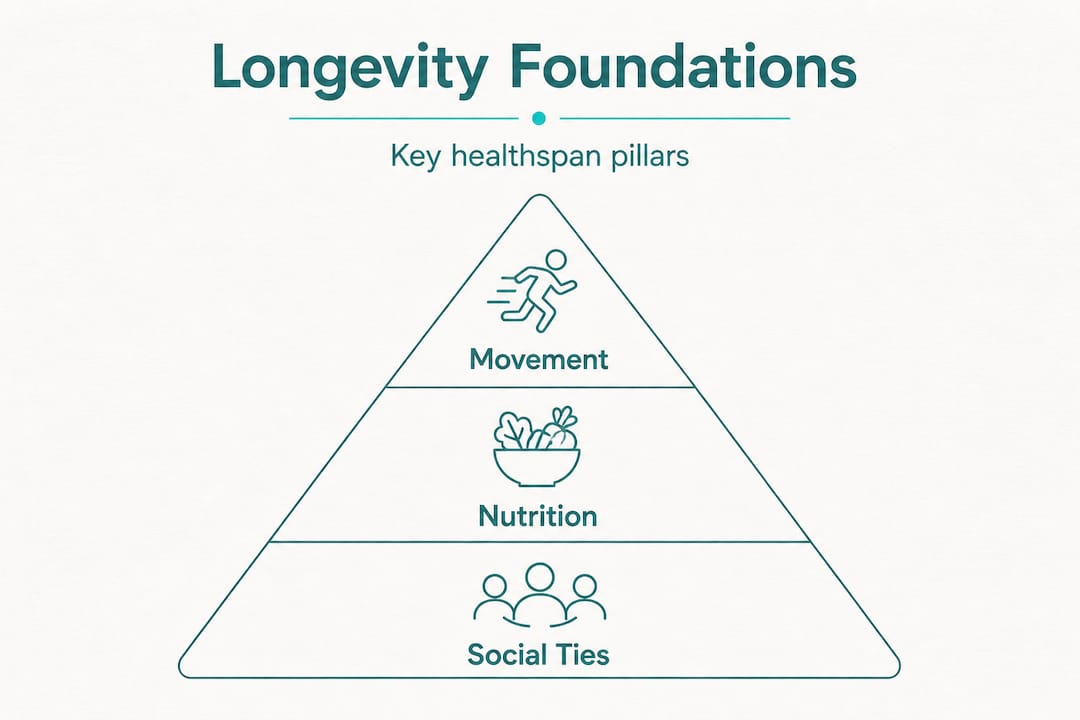
The evidence hierarchy is clear. Lifestyle factors like exercise, diet, sleep, and social ties form the foundation for longevity, with stronger and broader evidence than any supplement currently available. Researchers who spend their careers studying ageing consistently point to these pillars first. Supplements occupy a supplementary role, not a central one.
Here is a quick comparison of where the evidence stands:
| Factor | Level of evidence | Impact on healthspan |
|---|---|---|
| Regular physical activity | Very strong (multiple RCTs, cohort data) | High |
| Whole-food, plant-rich diet | Strong (observational, cohort studies) | High |
| Quality sleep (7 to 9 hours) | Strong (cohort studies) | Moderate to high |
| Social engagement | Moderate to strong | Moderate |
| Vitamin D supplementation | Moderate | Moderate (when deficient) |
| Multivitamin use | Modest | Low to moderate |
| Trendy supplements (NMN, resveratrol) | Limited or preliminary | Uncertain |
The table above shows that lifestyle interventions sit at the top by a considerable margin. This does not mean supplements are useless. It means the order of priorities matters.
Key principles to carry forward:
- Healthspan is the goal, not just years on the clock
- Lifestyle changes yield compounding benefits over decades
- Supplements address gaps, they do not replace foundations
- Evidence quality varies enormously across longevity interventions
“The most powerful longevity tools you have are not in a bottle. They are in your daily routine.”
Build the essential habits: movement, diet, and connections
Now that the basic pillars are clear, here is how to build these practices into daily life.
1. Move daily and include resistance training
Physical activity is the single intervention with the most consistent evidence across age groups. For adults over 40, resistance training and daily movement preserve muscle mass, maintain bone density, and reduce all-cause mortality risk. Starting at around 40, adults lose roughly 1% of muscle mass per year without deliberate effort to counteract it. Over a decade, this adds up to meaningful functional decline.
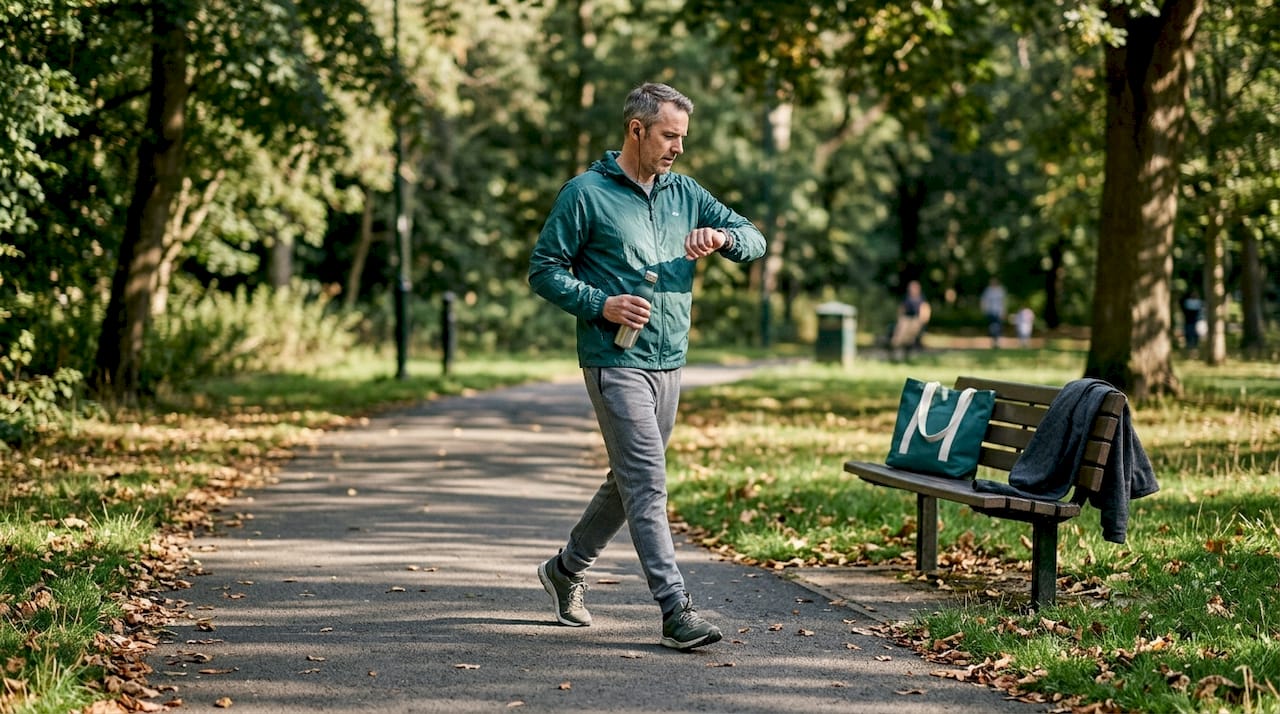
Aim for at least 150 minutes of moderate aerobic activity each week, combined with two to three resistance sessions. This does not require a gym membership. Bodyweight exercises, resistance bands, or simple compound movements like squats and press-ups are effective. The key is consistency over intensity, particularly in the beginning.
2. Eat more plants and fewer ultra-processed foods
A plant-based diet emphasising whole foods, fibre-rich vegetables, fruits, legumes, and healthy fats like olive oil is associated with lower risks of heart disease and cancer, and supports longevity. This pattern is clearly visible in the Blue Zones, the regions where people consistently live past 90 and 100.
The anti-ageing nutrition patterns from these regions are not exotic. Sardinians eat beans and whole grain flatbread. Okinawans centre meals around sweet potatoes. Seventh-day Adventists in Loma Linda, California, favour nuts, legumes, and fruit. The common thread is minimising ultra-processed food and animal products while maximising plant diversity.
Practical steps:
- Replace one meat-based meal per day with a legume-based option
- Add at least two different coloured vegetables to each main meal
- Swap refined grain products for whole grain versions
- Use olive oil as your primary cooking fat
- Reduce packaged snacks and sugar-sweetened drinks to occasional treats
3. Prioritise close relationships and optimism
Social isolation is not merely uncomfortable. Social connections and optimism reduce stress, lower systemic inflammation, and can extend lifespan by up to 15%. Adults over 40 often experience a natural narrowing of social networks as children leave home, careers shift, and friendships drift. Actively maintaining and investing in relationships is as important as diet or exercise.
Optimism is a trainable trait. Practices like gratitude journalling, reframing negative events, and engaging in purposeful activities all build the psychological resilience associated with longer, healthier lives.
Pro Tip: Sustainable routines outperform grand plans every time. Choose habits you can repeat on a difficult Tuesday, not just an ideal weekend. A 20-minute walk and a bean salad for lunch beats a heroic diet overhaul that collapses by week three.
Alongside these lifestyle habits, exploring science-backed nutrients can help you identify where targeted nutritional support makes sense for your specific needs.
The evidence on supplements: supportive or optional?
Once the fundamentals are covered, many wonder what role supplements play in the longevity equation.
The honest answer is nuanced. Supplements are neither magic bullets nor useless additions. They perform a specific and limited function: correcting deficiencies and providing modest additional support where diet and lifestyle cannot fully cover the gap.
Vitamin D
Deficiency in vitamin D is extremely common after 40, particularly in northern European countries with limited sunlight exposure. Vitamin D supplementation addresses these common deficiencies, supporting bone health, immune function, and cognitive health. A blood test can confirm your baseline, and most adults benefit from 1,000 to 2,000 IU daily, particularly through autumn and winter.
Multivitamins
The COSMOS trial, one of the largest supplement trials conducted, found that daily multivitamin supplementation modestly slows epigenetic ageing clocks, specifically showing a reduction of 0.113 years per year on the PCGrimAge measure. This is a real but modest effect. It does not override poor lifestyle habits, but for adults eating imperfectly (which is most people), a basic multivitamin offers low-risk, low-cost support.
What centenarians actually do
Interestingly, supplement use among centenarians is low. In a study of 2,877 Chinese centenarians, only 10.7% of females and 12.3% of males used supplements regularly. This does not prove supplements are useless, but it reinforces that reaching extreme old age appears to rely far more heavily on lifestyle and genetics than on supplementation.
| Supplement | Key evidence | Best use case |
|---|---|---|
| Vitamin D | Moderate, well-supported | Deficiency correction, bone, immunity |
| Multivitamin | Modest anti-ageing effect (COSMOS) | Gap-filling in imperfect diets |
| Omega-3 fatty acids | Moderate, cardiovascular support | Heart health, low fish intake |
| Magnesium | Moderate, sleep and muscle function | Deficiency, sleep quality issues |
| NMN / NR | Preliminary, human data limited | Experimental only |
Useful supplement considerations at a glance:
- Test before you supplement, particularly for vitamin D and B12
- Deficiency correction offers the clearest benefit
- Avoid stacking multiple unproven supplements simultaneously
- Quality matters: choose products with third-party testing
Pro Tip: Focus on correcting known deficiencies first. A targeted approach based on blood work delivers far more value than a broad stack of trendy compounds. For deeper guidance on supplements for graceful ageing, evidence-based resources can help you narrow down what actually matters for your age and circumstances.
Adults over 50 may find more specific guidance useful. Reviewing the supplement choices after 50 and the question of best vitamins for ageing adults can help you build a rational, personalised protocol.
Troubleshooting: overcoming common longevity roadblocks
Even with good intentions and clear strategies, several obstacles can make healthy routines difficult to maintain.
Time constraints
Lack of time is the most frequently cited barrier to exercise and meal preparation. The practical fix is designing for minimum effective dose. Research shows that even short, regular bouts of movement deliver significant health returns. Three ten-minute walks across a day count. A fifteen-minute resistance session three times per week is far better than nothing.
Batch cooking once or twice weekly removes the daily decision burden around food. Preparing a large pot of lentil soup, a grain salad, or roasted vegetables on a Sunday takes about an hour but provides nutritious meals for several days.
Motivation dips
Motivation fluctuates. Relying on it as your primary driver is a structural weakness in any health plan. The solution is removing friction and building in social accountability. Exercising with a friend, joining a walking group, or scheduling activity into your calendar as a non-negotiable appointment all reduce the role of willpower.
Misinformation and supplement overwhelm
The supplement industry generates enormous noise. New compounds are promoted constantly, often based on animal or early in-vitro studies that do not translate to meaningful human benefits. Applying the same critical lens to supplement claims as you would to any health decision protects both your wallet and your health. Check whether claims are supported by human randomised controlled trials before acting on them.
Hitting a plateau
After several months, progress in fitness or weight management often slows. Midlife habits have an outsized impact on later healthspan, so persistence through plateaus pays off. Varying exercise type, increasing intensity gradually, and revisiting dietary quality rather than quantity often restart progress.
Observational data from Blue Zones research aligns with cohort studies showing 15 to 35% reductions in mortality among people who follow plant-centred, naturally active, socially connected lifestyles. These are not dramatic biohacking protocols. They are sustainable, low-cost behaviours practised consistently over decades.
Pro Tip: Small consistent actions compound over time. A one-degree course correction seems trivial today but shifts your destination entirely over ten or twenty years. If you are unsure how to evaluate products or adjust your approach, guidance on selecting nutritional products for healthy ageing offers a structured starting point.
A new perspective: why longevity is about the everyday, not the extraordinary
Popular culture loves the idea of a breakthrough. A supplement discovered in a Himalayan plant. A fasting protocol practised by Silicon Valley executives. A device that tracks your biological age to the decimal point. These narratives are compelling precisely because they promise transformation without the unglamorous work of changing ordinary habits.
The evidence tells a different story. The people who live longest and healthiest are not doing something extraordinary. They are doing ordinary things extraordinarily consistently. They walk to the market. They share meals with neighbours. They tend gardens. They have a clear sense of purpose, what Okinawans call ikigai, a reason to get up in the morning.
This matters because it changes where you direct your energy. Chasing the latest longevity biohack while neglecting sleep, sitting for twelve hours a day, and eating predominantly processed food is a fundamentally backwards strategy. No supplement corrects a poor baseline.
There is also something important about integration. The longest-lived populations do not compartmentalise health into a gym session and a supplement regime. Activity is woven into daily life. Social connection happens naturally around food and shared purpose. Stress is managed through community and routine, not apps or retreats.
The uncomfortable reality is that sustainable longevity is not expensive, complex, or exclusive. It is accessible. It asks for discipline, not wealth. Consistency, not perfection. The myth of the silver bullet persists because the truth is less marketable: the most powerful longevity strategy is to make slightly better choices, every day, for decades.
Take the next step towards healthy longevity
If you are ready to act on the evidence and build a practical longevity plan, Vivetus offers the resources to help you move forward with confidence.
At Vivetus, you will find expert-backed content and scientifically supported nutritional products designed for adults who take healthy ageing seriously. Whether you are looking to address specific nutrient gaps, understand the latest research, or explore evidence-backed supplements for graceful ageing, the platform brings together guidance and products tailored to your stage of life. Free shipping on orders over €50 makes it straightforward to get started without unnecessary friction.
Frequently asked questions
What is the single most effective lifestyle change for longevity after 40?
Consistency in daily movement, especially resistance exercise, has the strongest evidence for boosting healthspan and lifespan after 40. Resistance training and movement preserve muscle mass, bone density, and reduce all-cause mortality risk significantly.
Do I need multivitamins or supplements to live longer?
Supplements like multivitamins or vitamin D are helpful to address specific deficiencies, but lifestyle habits make the biggest difference in longevity. Daily multivitamin supplementation modestly slows epigenetic ageing clocks, but cannot replace a strong lifestyle foundation.
How important is a plant-based diet for longevity?
Eating more plant-based, whole foods is associated with lower risk of chronic disease and longer life, as shown in Blue Zones research. A plant-rich whole-food diet reduces risks of heart disease and cancer and is consistently found among the world’s longest-lived populations.
Can social activities really help me live longer?
People with strong social connections and a positive outlook live longer and healthier lives, with measurable reductions in inflammation and stress. Social connection and optimism can extend lifespan by up to 15%, making it one of the most underrated longevity factors.
Is it ever too late to start longevity habits?
It is not too late. Even beginning in your 40s, positive changes in exercise and nutrition bring substantial benefits and meaningfully extend healthspan. Midlife positive habits have an outsized impact on later health outcomes, making your current decade one of the most important windows for change.