

Why prioritise vitamin intake for vitality and ageing
TL;DR:
- Vitamins are essential micronutrients that support energy, immunity, bones, and nerves, but excess supplementation can be harmful.
- A balanced diet should meet most needs; supplements are necessary only when deficiencies are identified through testing.
Vitamins are not optional extras. They are the micronutrients your body depends on for energy production, immune defence, bone integrity, and nerve function. Yet one of the most persistent misconceptions in health circles is that taking more supplements automatically means better health. The reality is more precise. Understanding why prioritise vitamin intake matters is about knowing which vitamins your body actually needs, in what amounts, and from which sources. This article cuts through the noise and gives you a clear, evidence-based framework for making smarter decisions about your vitamin intake.
Table of Contents
- Key takeaways
- Why prioritise vitamin intake: the core case
- Which vitamins deserve the most attention
- Diet first, supplements second
- Assessing your own vitamin needs
- My view on getting vitamin prioritisation right
- Find the right supplements for healthy ageing
- FAQ
Key takeaways
| Point | Details |
|---|---|
| Vitamins serve specific functions | Each vitamin supports distinct body systems; deficiency in one cannot be compensated by another. |
| Diet comes before supplements | A varied, balanced diet meets most vitamin needs; supplements fill specific, identified gaps. |
| Some vitamins deserve priority | Vitamin D, B1, and B2 are commonly deficient, especially in older adults and those with limited sun exposure. |
| Biochemical testing detects early deficiency | Symptoms often appear late; lab tests can identify shortfalls before health declines. |
| Excessive supplementation carries risks | Too much vitamin D, for example, can cause hypercalcaemia and kidney damage. |
Why prioritise vitamin intake: the core case
Your body cannot synthesise most vitamins on its own. It relies entirely on what you eat, and in some cases, on what you supplement. Vitamins and minerals are needed in small amounts for normal body functions, and a balanced diet usually provides enough. That word “usually” carries a lot of weight.
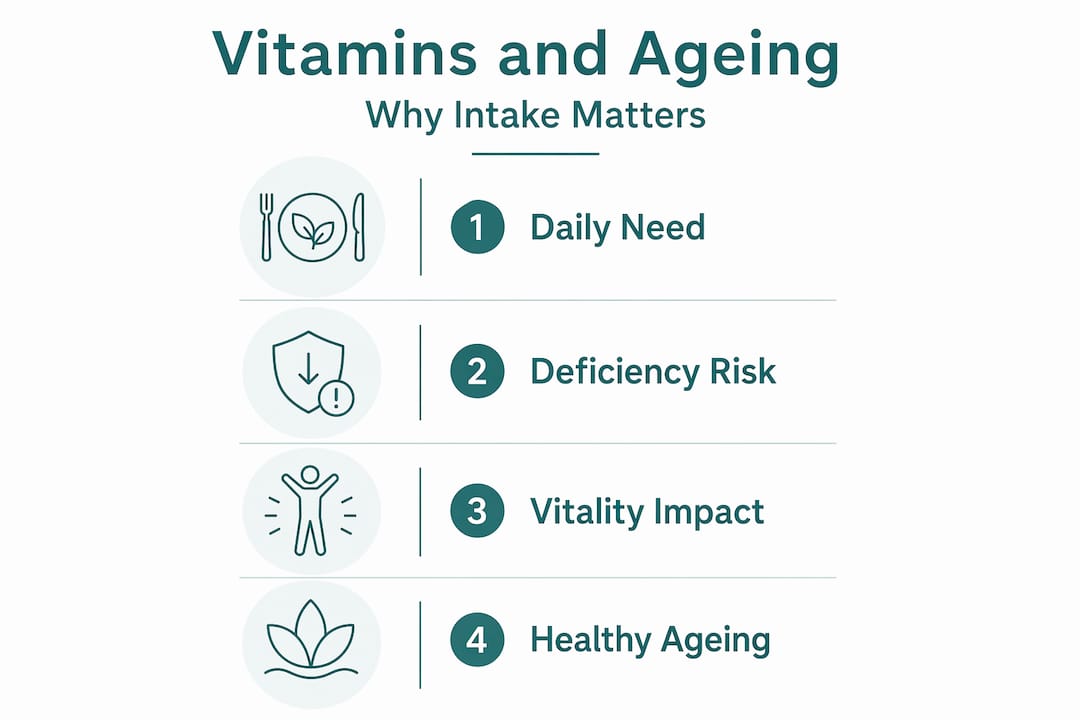
The importance of vitamin intake becomes clearest when you consider what happens in its absence. Vitamins do not work in isolation. They participate in enzymatic reactions, cellular repair, hormone synthesis, and immune signalling. When one is missing or insufficient, those processes slow down or fail. The effects are not always dramatic at first. That is precisely what makes deficiency so easy to overlook.
There are two broad categories to understand. Fat-soluble vitamins (A, D, E, and K) are stored in body fat and the liver, which means they accumulate over time. Water-soluble vitamins (the B vitamins and vitamin C) are not stored in significant amounts, so they require more consistent daily intake. This distinction matters when you are deciding how to approach supplementation.
Key functions vitamins perform in the body include:
- Energy metabolism: B vitamins, particularly B1, B2, and B3, help convert food into usable energy at the cellular level.
- Immune defence: Vitamins C and D play well-documented roles in supporting immune responses.
- Bone and muscle health: Vitamin D works alongside calcium and magnesium to maintain bone density and muscle function.
- Nerve function: B vitamins, especially B1 and B12, are critical for maintaining healthy nerve signals.
- Antioxidant protection: Vitamins C and E help neutralise free radicals that contribute to cellular ageing.
Understanding these roles is the foundation for making informed decisions about which vitamins to prioritise.
Which vitamins deserve the most attention
Not all vitamins carry the same deficiency risk. Some are abundant in most diets. Others are notoriously difficult to obtain in adequate amounts, particularly as you age or if your lifestyle limits certain food groups or sun exposure.
Vitamin D is perhaps the most widely discussed. NHS inform recommends vitamin D supplements especially in winter or for those in risk groups, because food sources are limited and sun exposure in northern climates is often insufficient. Older adults are particularly vulnerable because skin becomes less efficient at synthesising vitamin D from sunlight with age. The consequences of deficiency include weakened bones, reduced muscle strength, and impaired immune function.

Vitamin B1 (thiamine) is another priority. Older adults face elevated risk of B1 deficiency, which affects both the cardiovascular and nervous systems. Symptoms can include memory difficulties, fatigue, and in severe cases, serious neurological conditions. High-risk groups include people with alcohol use disorder, those with malabsorption conditions, and individuals with consistently poor dietary variety.
Vitamin B2 (riboflavin) is frequently overlooked. Riboflavin deficiency can be subclinical, meaning biochemical abnormalities appear in lab results before any obvious symptoms develop. Signs when they do appear include cracked lips, inflamed tongue, and anaemia. Because the deficiency is often silent, many people carry it without knowing.
- Identify your personal risk factors (age, dietary restrictions, sun exposure, health conditions).
- Focus first on vitamins with documented deficiency rates in your demographic.
- Get a baseline blood test before starting any supplementation programme.
- Choose food sources where possible, and use supplements to address confirmed gaps.
- Review your intake periodically, especially as your health or lifestyle changes.
Pro Tip: If you are over 50, vitamin D and B12 are the two most common deficiencies to screen for, even if you feel well. Biochemical shortfalls often precede symptoms by months or years.
Diet first, supplements second
The benefits of vitamins are best delivered through food. Whole foods provide vitamins alongside fibre, phytonutrients, and co-factors that support absorption in ways isolated supplements cannot fully replicate. A balanced diet usually meets most vitamin needs without supplementation.
Here is a practical comparison of food sources for three priority vitamins:
| Vitamin | Top food sources | When supplements are warranted |
|---|---|---|
| Vitamin D | Oily fish, egg yolks, fortified dairy | Low sun exposure, winter months, over-65s |
| Vitamin B1 | Wholegrains, legumes, pork, nuts | Alcohol use disorder, malabsorption conditions |
| Vitamin B2 | Dairy products, lean meat, eggs, leafy greens | Vegan diets, chronic illness, poor dietary variety |
The case for supplements is real, but it is conditional. Situations that genuinely warrant supplementation include limited sun exposure, dietary restrictions such as veganism, advancing age, and certain medical conditions that reduce absorption. Outside of these contexts, taking supplements without identifying a specific need offers limited benefit.
The risk of excess is also worth taking seriously. Too much vitamin D can cause hypercalcaemia, leading to kidney stones and other adverse effects. This is not a theoretical risk. It occurs when people self-prescribe high-dose supplements without testing their baseline levels first.
Pro Tip: Meal planning for vitamin diversity does not require complexity. Rotate your protein sources across the week, include at least two portions of oily fish, and prioritise dark leafy greens. These simple habits cover a broad spectrum of micronutrient needs.
Multivitamins are a common shortcut, but the evidence for broad-spectrum supplements is mixed. Research reviews show limited effect on heart disease or cancer prevention, with some cognitive benefit seen in specific studies. Targeted intake based on confirmed need consistently outperforms the scatter-gun approach.
Assessing your own vitamin needs
Knowing the vitamin intake advantages in theory is useful. Applying that knowledge to your own situation is where the real value lies. The process starts with honest self-assessment.
Consider the following risk factors that increase the likelihood of deficiency:
- Age over 60, when absorption efficiency declines across several vitamins
- Following a vegan or highly restrictive diet
- Living in a northern climate with limited year-round sun exposure
- Diagnosed gastrointestinal conditions such as Crohn’s disease or coeliac disease
- Regular use of medications that interfere with nutrient absorption (proton pump inhibitors, for example, reduce B12 absorption)
- History of alcohol use disorder or poor dietary consistency
Risk groups for deficiency include older adults, those with malnutrition, gastrointestinal disease, and individuals with increased metabolic demands. If you fall into one or more of these categories, self-assessment alone is not sufficient.
The most reliable next step is a conversation with your GP or a registered dietitian, followed by targeted blood tests. Subclinical deficiencies are detectable through biochemical markers before symptoms appear, which means early screening gives you the opportunity to correct shortfalls before they affect your health.
Diet tracking is a practical complement to professional testing. Logging your meals for two to three weeks using a reliable nutrition app will reveal patterns. You may find you rarely eat oily fish, or that your B vitamin sources are limited to one or two foods. These gaps are worth addressing through diet adjustments before reaching for supplements.
Avoid the common mistake of self-diagnosing based on symptoms alone. Fatigue, for instance, is associated with deficiencies in B12, D, and iron, but it is also a symptom of dozens of other conditions. Treating symptoms without identifying the cause leads to unnecessary supplementation and, in some cases, to masking a condition that needs proper attention.
My view on getting vitamin prioritisation right
I have worked with enough people on nutritional health to say this with confidence: the biggest mistake is not ignoring vitamins entirely. It is supplementing randomly without understanding what the body actually needs.
In my experience, the people who benefit most from thinking carefully about how vitamins support health are those who approach it systematically. They get tested. They look at their diet honestly. They do not assume that because they feel fine, everything is adequate. Subclinical deficiency does not announce itself.
What I have found particularly striking is how often vitamin D and B2 shortfalls go undetected for years. People attribute their fatigue or low mood to stress or ageing, when a simple blood panel would have flagged a correctable deficiency. The biochemical detection of deficiency before symptom onset is one of the most underused tools available to health-conscious individuals.
My view on ageing and vitamins is straightforward. As you get older, your absorption capacity changes, your dietary variety may narrow, and your skin becomes less efficient at producing vitamin D. These are not dramatic events. They are gradual shifts that compound over time. Addressing them early, with targeted and informed supplementation where needed, is one of the most practical things you can do for long-term vitality.
I am not an advocate for supplement stacks or high-dose protocols. What I do advocate is knowing your numbers, eating broadly, and using supplements as a precise tool rather than a safety net.
— Jord
Find the right supplements for healthy ageing
If this article has prompted you to take a closer look at your own vitamin intake, the next step is getting reliable, science-backed guidance rather than generic product recommendations.

Vivetus provides resources specifically designed for health-conscious individuals who want to make informed decisions about supplementation. Whether you are looking for supplement safety guidance tailored to older adults, or a structured overview of which nutrients matter most after 50, the vitamins to prioritise after 50 guide is a practical starting point. Vivetus focuses on products that are grounded in evidence, matched to real physiological needs, and appropriate for the specific demands of healthy ageing.
FAQ
Why should you prioritise vitamin intake over general supplements?
Targeted vitamin intake based on identified needs delivers better outcomes than broad-spectrum supplementation. Research shows that multivitamins offer limited evidence for disease prevention, while addressing specific deficiencies produces measurable health benefits.
Which vitamins are most commonly deficient in older adults?
Vitamin D, B1, and B12 are among the most frequently deficient in older adults, due to reduced absorption, limited sun exposure, and narrower dietary variety. Screening for these through blood tests is the most reliable approach.
Can you have a vitamin deficiency without any symptoms?
Yes. Subclinical deficiencies are detectable through biochemical markers before symptoms appear, which is why relying on how you feel is not a sufficient measure of your vitamin status.
Is it possible to take too many vitamins?
Yes, particularly with fat-soluble vitamins. Excess vitamin D, for example, can lead to hypercalcaemia and kidney damage. Always confirm your baseline levels before starting high-dose supplementation.
How do vitamins support healthy ageing specifically?
Vitamins support bone density, muscle function, immune resilience, and cognitive health, all of which decline with age if nutritional needs are not met. Prioritising intake of vitamins D, B1, B2, and B12 addresses the most common age-related deficiency pathways.