

The role of sleep supplements: Science, benefits and safe use
TL;DR:
- Many adults over 30 seek sleep supplements expecting instant results, but effectiveness varies based on individual factors. Different compounds like melatonin, magnesium, ashwagandha, and L-theanine target distinct sleep mechanisms, necessitating tailored choices. Safe, targeted use alongside good sleep habits can support overall sleep quality, but they are not replacements for healthy sleep practices.
Many adults over 30 reach for a sleep supplement expecting immediate, reliable results, only to find the reality far more complicated. Sleep supplements such as melatonin, magnesium, valerian, ashwagandha, and L-theanine modulate neurotransmitters, hormones, and stress responses to influence sleep, but none works the same way for everyone. Effectiveness depends on the type of sleep problem, personal health, dosage, and consistency. This guide clarifies the science, compares the main options, addresses safety honestly, and gives you practical steps to make informed choices.
Table of Contents
- How sleep supplements work in the body
- Comparing key sleep supplements: Efficacy and appropriate use
- Risks, safe use and common misconceptions
- Best practices for selecting and combining sleep supplements
- Why sleep supplements are helpful—but rarely a silver bullet
- Support your sleep and vitality with trusted supplements
- Frequently asked questions
Key Takeaways
| Point | Details |
|---|---|
| Supplements support—not solve | Sleep supplements can help certain people but work best when combined with good sleep habits and stress management. |
| Tailor to your needs | Melatonin, magnesium and ashwagandha address different sleep problems—choose based on your specific challenge. |
| Safety and quality matter most | Prioritise short-term use, proven ingredients, and consult medical advice, especially with other conditions or medications. |
| Evidence varies by supplement | Strongest support exists for melatonin and magnesium; herbal options are less consistently effective. |
How sleep supplements work in the body
Understanding the mechanisms behind sleep supplements is the essential first step before comparing options. The brain does not simply “switch off” at bedtime. It moves through a carefully regulated sequence of hormonal signals and neurochemical shifts. Sleep supplements act on these signals in distinct ways.
Melatonin is a hormone produced naturally by the pineal gland when light fades. Supplemental melatonin does not sedate you; it repositions your internal clock, making it useful for timing problems rather than depth of sleep. Magnesium supports the activity of gamma-aminobutyric acid, or GABA, the brain’s primary calming neurotransmitter, while also relaxing skeletal muscle tension. Ashwagandha (Withania somnifera) reduces circulating cortisol, the stress hormone that keeps the nervous system in a state of alert. L-theanine, found naturally in green tea, promotes calm neural activity by increasing alpha brain waves without causing sedation.
Each compound targets a different pathway. This distinction matters enormously in practice:
- Melatonin: best for circadian disruption, not for consolidating fragmented sleep
- Magnesium: addresses muscular tension and low GABA activity
- Ashwagandha: most relevant when stress or elevated cortisol is the primary driver of poor sleep
- L-theanine: useful for racing thoughts at bedtime, often combined with other compounds
- Valerian root: modestly influences GABA receptors but with weaker and less consistent evidence
“The choice of supplement should follow the type of sleep problem, not a one-size-fits-all approach. Mismatching mechanism to cause is one of the most common reasons supplements fail to deliver results.”
This mechanistic diversity also connects to broader aspects of wellbeing. Poor sleep accelerates cognitive decline over time, making supplement choices relevant to cognitive health after 40 as well. The supplement you need depends on why you are not sleeping, not simply on the fact that you are not sleeping.
Pro Tip: Before buying any sleep supplement, write down the specific nature of your sleep problem. Is it difficulty falling asleep, frequent waking, or early morning waking? This single distinction will narrow your options considerably and improve your chance of success.
Comparing key sleep supplements: Efficacy and appropriate use
With the mechanics clear, it is time to compare the most popular sleep supplements. Each has strengths and clear uses, and understanding these prevents wasted money and frustration.
Melatonin is the most studied sleep supplement in the world. It acts as a chronobiotic hormone that regulates circadian rhythms and is effective for sleep onset in older adults, jet lag, and shift work. Short-term use is safe with a low risk of dependency. The critical detail most people miss: the effective dose is far lower than what most commercial products contain. Research consistently points to 0.5mg to 3mg as the therapeutic range. Products containing 5mg, 10mg, or even 20mg do not work better; they simply increase the likelihood of next-day grogginess and disrupt the natural feedback loop of endogenous melatonin production.
Magnesium in its better-absorbed forms (glycinate or threonate) at 200 to 400mg improves overall sleep quality without grogginess after one to two weeks of consistent use. It relaxes muscles and supports GABA pathways, making it well suited for maintenance sleep problems rather than onset difficulties. Many adults over 40 are mildly deficient in magnesium, which makes this supplement particularly relevant to this age group.

A systematic review of dietary supplements found improvements in PSQI (Pittsburgh Sleep Quality Index) scores, sleep efficiency, total sleep time, reduced sleep latency, and reduced time awake after sleep onset. Notably, tryptophan, vitamin D, omega-3 fatty acids, zinc, and antioxidants all showed meaningful contributions, broadening the conversation beyond the most famous supplements.
| Supplement | Primary use | Typical dose | Evidence quality | Key limitation |
|---|---|---|---|---|
| Melatonin | Sleep onset, jet lag | 0.5–3mg | Strong | Not for maintenance sleep |
| Magnesium glycinate | Sleep quality, maintenance | 200–400mg | Moderate to strong | Slower onset (1–2 weeks) |
| Ashwagandha | Stress-related insomnia | 300–600mg | Moderate | Less effective without stress component |
| L-theanine | Racing thoughts, mild anxiety | 100–200mg | Moderate | Subtle effect; often combined |
| Valerian root | General relaxation | 300–600mg | Mixed | Inconsistent evidence across trials |
Additional considerations worth noting:
- Combination products are popular but not necessarily superior. Each added ingredient increases complexity and the risk of unclear attribution when something works or does not.
- Timing matters. Melatonin should be taken 30 to 60 minutes before the desired sleep time. Magnesium works well taken in the evening. Ashwagandha can be taken morning or evening.
- Form affects absorption. Magnesium oxide has poor bioavailability. Magnesium glycinate and threonate are far better choices.
Selecting the right supplement also requires thinking about long-term health goals. Explore how graceful ageing supplements can support sleep as part of a broader vitality strategy, and learn more about choosing supplements for ageing to align your choices with your overall health picture.
Pro Tip: If you are over 50, magnesium glycinate is often the most practical starting point. Sleep architecture changes naturally with age, and magnesium supports the deep sleep stages that tend to diminish first.
Risks, safe use and common misconceptions
Before choosing a supplement, it is vital to understand not only benefits but also safety and what most people overlook. Sleep supplements are not prescription drugs, but they are not entirely without risk either.
The most common side effects of melatonin include headache, dizziness, nausea, and grogginess if overdosed. In many commercial formulations, melatonin content varies considerably from what the label states due to poor quality control. Studies have found that labelled doses can differ from actual content by significant margins in either direction, making product quality a genuine concern.
“Taking more does not mean sleeping better. With melatonin in particular, a higher dose often works against you by disrupting the timing mechanism you are trying to support.”
Key safety considerations to keep in mind:
- Pregnancy and breastfeeding: most sleep supplements lack adequate safety data; avoid without medical guidance
- Autoimmune conditions: ashwagandha is an immune modulator and may not be appropriate; consult your GP
- Multiple medications: melatonin interacts with anticoagulants, blood pressure medication, and immunosuppressants
- Benzodiazepine or sleep medication use: combining supplements with sedatives requires professional supervision
- Children and adolescents: melatonin use in young people requires careful dose management and should not be long-term
It is also important to address a persistent misconception. No supplement is universally effective, and addressing root causes such as stress, nutritional deficiencies, and poor sleep habits must come before or alongside supplementation. The evidence base is strongest for melatonin and magnesium, with more limited long-term data available for most herbal compounds.
Practical safety guidelines also include choosing products with third-party testing verification, such as NSF International or USP certification, which confirms that what is on the label is what is in the capsule. Review supplement safety tips to make more informed decisions about product selection and quality standards.
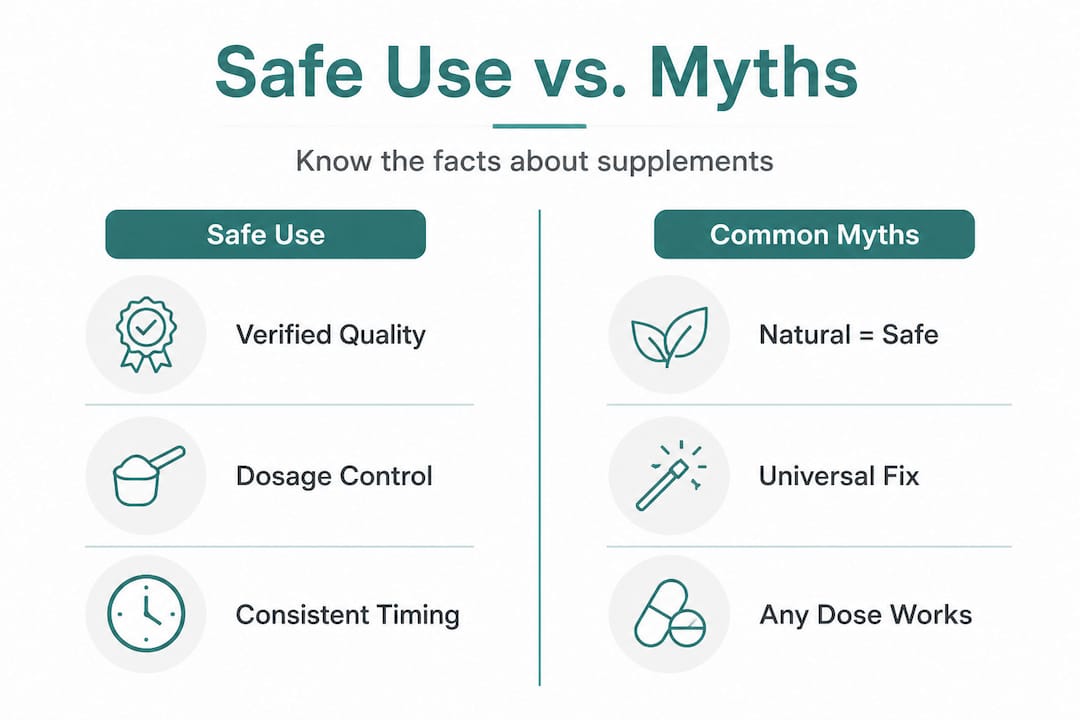
A particular misconception worth dispelling is the belief that “natural” automatically means safe. Valerian, for example, can cause vivid dreams, headaches, and mild liver concerns with prolonged use. Ashwagandha is contraindicated in thyroid disorders at therapeutic doses. The word “natural” describes origin, not risk profile.
Pro Tip: Always start with the lowest effective dose of any new sleep supplement and maintain consistent timing for at least two weeks before assessing whether it is working. Inconsistent use is one of the top reasons people incorrectly conclude a supplement does not help.
Best practices for selecting and combining sleep supplements
With an understanding of safety and evidence, you can now approach supplement selection and combination with confidence. This is where a structured approach makes the biggest difference.
- Identify the specific problem type. Difficulty falling asleep points to melatonin or L-theanine. Waking during the night or unrestorative sleep points more to magnesium. Stress-related insomnia across the whole night is where ashwagandha shows its value.
- Start with a single, evidence-backed ingredient. Combination products can obscure which compound is actually helping. Beginning with one ingredient at a verified dose gives you clear feedback.
- Assess your age and health context. Adults over 50 often have declining magnesium status and melatonin production. Those with high stress loads and poor recovery may benefit from ashwagandha. These are not universal; they are starting hypotheses to test.
- Select for quality, not price. Choose products with clear labelling, third-party testing, and transparent ingredient sourcing. The supplement market contains wide variation in quality.
- Pair supplementation with sleep hygiene. Healthy sleep practices such as consistent sleep and wake times, limiting light exposure in the evening, and managing caffeine intake are not optional add-ons. They are the substrate on which supplements can work.
- Seek professional input when complexity increases. If you are managing a chronic condition, take regular medications, or plan to combine multiple supplements, a GP or pharmacist review is appropriate before proceeding.
Adaptogenic herbs such as ashwagandha and rhodiola offer additional benefits beyond sleep when stress is a primary driver of health concerns. Learn about adaptogen benefits if stress-driven fatigue and poor recovery are part of your broader picture.
The practical reality is that supplements work best as a structured intervention, not an improvised one. Define your goal, choose your compound, set a consistent protocol, and evaluate after four to six weeks.
Pro Tip: Keep a simple sleep log during any new supplement trial. Note your sleep timing, approximate quality, and any side effects. This turns anecdote into data and helps you make sharper decisions.
Why sleep supplements are helpful—but rarely a silver bullet
Having covered best practices, it is worth sharing a grounded perspective informed by both research and practical experience in the supplement space.
The appeal of sleep supplements is understandable. Sleep problems are frustrating, and the idea of a capsule that resolves them quickly is attractive. In reality, the most reliable evidence points to a more measured conclusion. Short-term use of well-chosen, high-quality supplements can genuinely support better sleep, particularly when targeting a specific mechanism. Melatonin for a disrupted schedule, magnesium for a deficiency-driven quality deficit, ashwagandha during a period of elevated stress: these are targeted, logical interventions with real evidence behind them.
What supplements cannot do is compensate for chronically poor sleep habits, unmanaged psychological stress, or an environment that actively disrupts sleep. Expert consensus is clear that cognitive behavioural therapy for insomnia (CBT-I) and sleep hygiene produce superior long-term outcomes compared to supplements alone, and that USP-verified products should be selected due to quality variability across the market.
The pattern we see most often is this: people use a supplement inconsistently, at the wrong dose, without addressing the underlying cause, then conclude that supplements do not work. The more productive frame is to treat supplementation as a short-term support tool during a period of active lifestyle improvement. Consider the full picture of supplement strategies for ageing as part of a wider, coherent approach rather than a standalone solution.
Patience is also underrated. Magnesium may take one to two weeks to show effect. Ashwagandha research points to eight weeks of consistent use for measurable cortisol reduction. If you abandon a protocol after five days because you do not feel transformed, you have not given the science a fair test.
The honest position is this: quality sleep supplements, chosen correctly and used consistently alongside strong sleep hygiene, can meaningfully improve your sleep. They are a useful component of a considered approach, not a replacement for one.
Support your sleep and vitality with trusted supplements
Translating research into practical action requires access to products that meet the quality standards outlined above. Formulation, dosage accuracy, and ingredient sourcing determine whether a supplement delivers the results the evidence promises.

At Vivetus, the focus is on scientifically supported supplements selected for quality, transparency, and relevance to healthy ageing. Whether you are addressing sleep onset, overnight quality, or stress-related fatigue, the range is formulated around evidence rather than marketing claims. The Energy & Vitality bundle offers a practical starting point for adults looking to support both sleep and daily energy through targeted, well-dosed ingredients. Free shipping on orders over €50 is available across the international customer base. Where appropriate, consult your GP before beginning any new supplement regimen, particularly if you manage ongoing health conditions.
Frequently asked questions
Which sleep supplement is best for difficulty falling asleep?
Melatonin is the most evidence-backed option for sleep onset problems, particularly for jet lag and circadian disruption; start at a low dose (0.5–1mg) and use short-term, as melatonin regulates circadian rhythms rather than inducing deep sedation.
Are sleep supplements safe for long-term use?
Short-term use is generally considered safe for healthy adults, but long-term data remains limited for most supplements, particularly herbals; consult your GP before extended or ongoing use.
What are the most common side effects of sleep supplements?
Headache, dizziness, and mild nausea are the most frequently reported issues, with grogginess a particular concern when melatonin is taken at excessive doses; starting low minimises this risk considerably.
Can sleep supplements be taken with other medications?
Interactions are possible, particularly between melatonin and anticoagulants or blood pressure medications; always consult your GP or pharmacist before combining any sleep supplement with prescribed medicines.
Is it safe to combine multiple sleep supplements?
Combining two or more supplements can be effective but increases the complexity of monitoring for side effects; begin with one compound, assess its effect over several weeks, and consult a healthcare professional before adding further ingredients.