

How to age healthily: your practical guide for 2026
TL;DR:
- Healthy ageing depends on lifestyle choices that influence physical, mental, and social well-being over time. Consistent habits like resistance training, quality sleep, balanced nutrition, and social connection significantly slow biological ageing and preserve independence. It is never too late to begin adopting these practices for improved vitality and longevity.
Ageing well is not about luck or genetics alone. Knowing how to age healthily gives you real leverage over your vitality, independence, and quality of life for decades to come. The challenge is that most people either ignore the fundamentals until something goes wrong, or they chase quick fixes that deliver nothing lasting. Research shows that lifestyle accounts for roughly half of your biological ageing rate, which means the choices you make daily carry far more weight than most people realise. This guide covers what actually works.
Table of Contents
- Key takeaways
- How to age healthily: the foundations
- Daily habits for exercise, nutrition, and sleep
- Social and psychological strategies for longevity
- Functional movement and independence
- Building habits that actually last
- My perspective on ageing well
- How Vivetus supports your healthy ageing goals
- FAQ
Key takeaways
| Point | Details |
|---|---|
| Lifestyle drives half your ageing rate | Genes set the stage, but daily habits determine how fast or slowly you age biologically. |
| Strength training is non-negotiable | Around 100 minutes of resistance training weekly supports muscle mass, metabolic health, and longevity. |
| Sleep protects your brain | Seven to nine hours nightly reduces dementia risk and supports hormonal repair. |
| Social connection extends life | Strong social ties increase survival odds by 50%, making relationships a genuine health asset. |
| Start small and stay consistent | Gradual habit-building outperforms short-term intensity every time for long-term results. |
How to age healthily: the foundations
Before you change anything, it helps to understand what healthy ageing actually means. It is not simply the absence of disease. It is the ability to maintain physical function, mental sharpness, and social engagement well into later life. Your biological age, shaped by your habits and environment, can differ significantly from your chronological age.
A few simple self-assessments tell you more than you might expect. Can you stand on one leg for 10 seconds without holding anything? Can you rise from a chair without using your arms? These are not party tricks. They are functional indicators of balance, strength, and joint health that predict how well you will manage independent living as you get older.
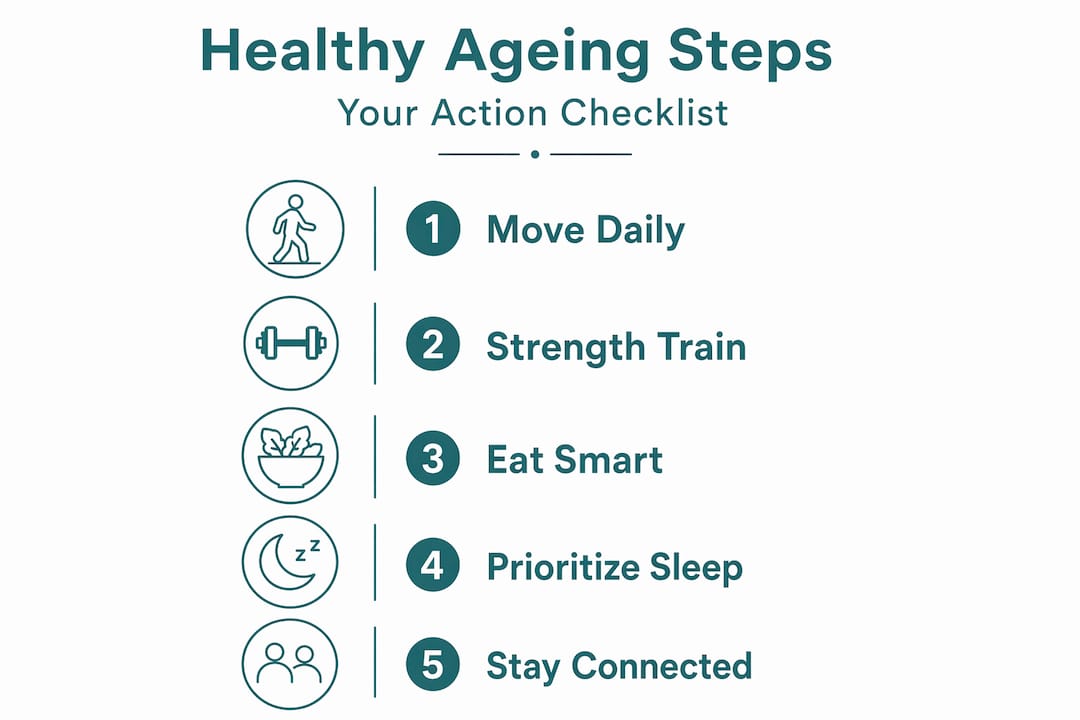
Mental and social health belong in this foundation too. Cognitive engagement, emotional resilience, and a sense of purpose are not soft extras. They are measurable contributors to how long and how well you live. Many people focus entirely on the physical side and neglect these areas until problems appear.
Nutritionally, the most common pitfall for adults over 50 is under-eating protein. Most people consume far less than the 1.2 to 1.6 grams per kilogram of body weight that supports muscle maintenance in later life. Getting this right from the outset makes every other habit more effective.
- Assess your balance: stand on one leg for 10 seconds per side
- Check your mobility: can you sit on the floor and rise without using your hands?
- Review your protein intake: aim for at least 25 to 30 grams per meal
- Consider your social calendar: are you maintaining regular, meaningful contact with others?
Pro Tip: Take a baseline photo or written record of your functional tests today. Revisiting them in three months gives you concrete evidence of progress, which is far more motivating than scale weight alone.
Daily habits for exercise, nutrition, and sleep
This is where the best practices for ageing well become concrete. Three areas carry the most weight: how you move, what you eat, and how you sleep.
Exercise: build strength, not just cardio
The evidence is clear. Muscle mass predicts longevity more reliably than BMI in adults over 55, affecting metabolic health, blood sugar control, and injury prevention. Yet most older adults still prioritise walking or cycling while skipping resistance work entirely.
Aim for roughly 100 minutes of resistance training per week, spread across two or three sessions. This does not require a gym. Bodyweight squats, press-ups, and resistance band rows all count. Pair this with balance work. Standing on one leg for 10 seconds correlates with significantly better mortality outcomes in people aged 51 to 75. Practise it daily, five to ten times per leg.
Exercises for older adults that combine strength and balance, such as single-leg deadlifts or step-ups with a pause at the top, are particularly useful because they train the body for the real-world demands of daily life.
Nutrition: eat for strength, not restriction
Eating for healthy ageing means prioritising nutrient density over calorie restriction. A modest body weight with adequate muscle mass supports resilience during illness far better than extreme leanness. Focus on:
- Protein at every meal: eggs, fish, legumes, Greek yoghurt, or quality meat
- Fibre from plants: aim for 25 to 30 grams daily from vegetables, fruit, pulses, and wholegrains
- Healthy fats: olive oil, oily fish, nuts, and avocado support brain and joint health
- Hydration: thirst sensitivity declines with age, so drink water consistently rather than waiting to feel thirsty
Pro Tip: If you struggle to hit your protein target through food alone, a high-quality protein supplement taken after resistance training is one of the most evidence-backed additions you can make to your routine.
Sleep: the underestimated repair mechanism
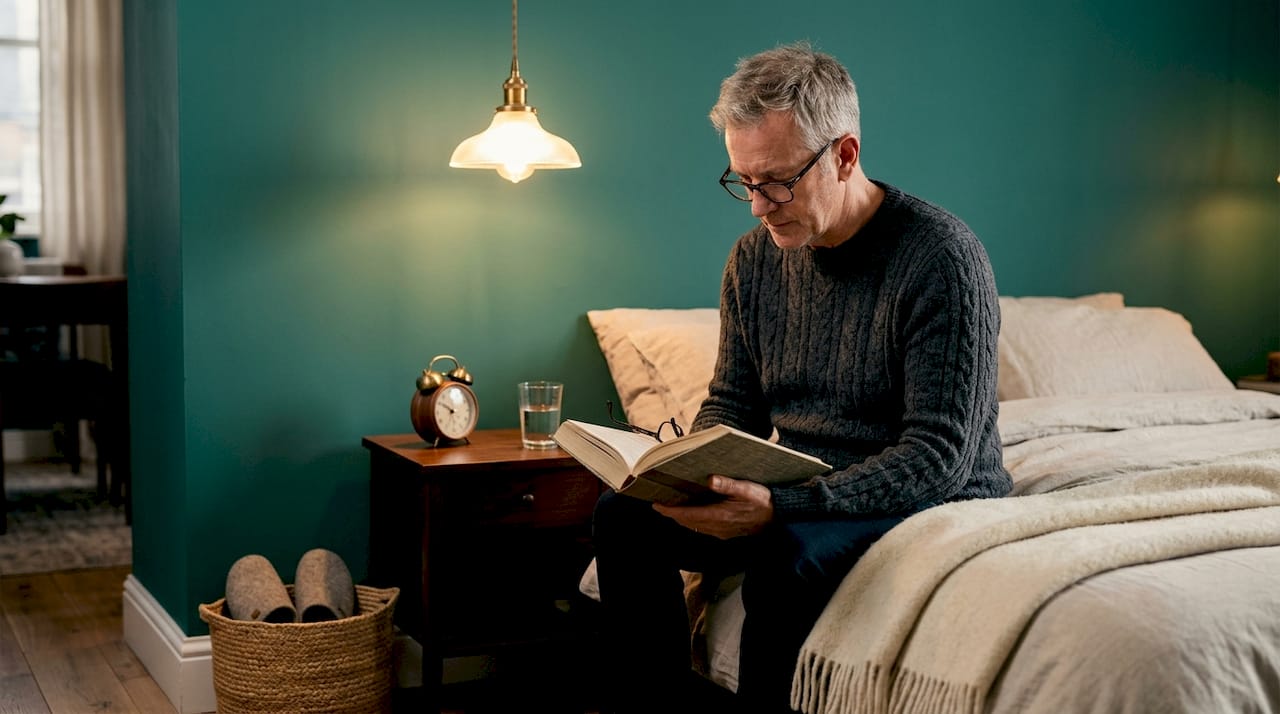
Adults who sleep fewer than six hours nightly face higher dementia risk and measurably accelerated ageing. Seven to nine hours is the target. Quality matters as much as quantity. Keep a consistent sleep and wake time, limit alcohol in the evening (it fragments sleep architecture even in small amounts), and keep your bedroom cool and dark.
Consistent healthy habits at age 50 can add seven to ten years of healthy life, and sleep is one of the non-negotiable pillars that makes the rest of your habits actually work.
Social and psychological strategies for longevity
The psychological dimension of ageing is where many people leave the most gains on the table. Strong social connections increase survival odds by 50%, a figure that rivals the impact of exercise. Yet social isolation tends to creep up gradually, particularly after retirement or when children leave home.
Practical ways to maintain and build meaningful connections include:
- Joining a class or club with a regular schedule, which creates accountability alongside social contact
- Volunteering, which combines purpose, community, and cognitive engagement in one activity
- Scheduling social commitments as firmly as medical appointments, not as optional extras
- Using video calls to maintain relationships across distances rather than letting them fade
Stress deserves particular attention. Chronic stress accelerates ageing at the cellular level through sustained cortisol elevation and inflammation. This is not a vague warning. It is a measurable biological process. Meditation, even ten minutes daily, has documented effects on cortisol and inflammatory markers. Setting clear boundaries around work, news consumption, and draining relationships is equally practical.
Lifelong learning and a sense of purpose are not lifestyle luxuries. They are documented contributors to cognitive resilience and reduced mortality risk in older adults.
Curiosity keeps the brain plastic. Learning a language, taking up an instrument, or engaging with genuinely challenging material creates new neural pathways that buffer against cognitive decline. Mindset matters too. People who hold a positive view of their own ageing live, on average, several years longer than those who do not.
Functional movement and independence
One of the least discussed but most telling indicators of how well you are ageing is your ability to move freely at floor level. Floor sitting and squatting preserve the joint mobility and hip flexibility that underpin independent living. Most adults in Western countries stop doing these movements in their thirties and pay for it decades later.
The ability to get up from the floor without using your hands or knees is a genuine functional longevity indicator. It tests hip strength, core stability, and balance simultaneously. If you cannot do it now, that is useful information, not a verdict.
| Movement | What it tests | How to practise |
|---|---|---|
| Floor sit and rise | Hip mobility, core strength, balance | Practise daily, reduce hand support progressively |
| Single-leg stand | Balance, ankle stability | 10 seconds per leg, five times daily |
| Deep squat hold | Ankle, knee, and hip range of motion | Hold for 30 to 60 seconds, use a doorframe for support initially |
| Step-up with pause | Unilateral leg strength | Use a stair, pause at the top for two seconds |
Integrating these movements into your daily routine is more effective than treating them as a separate exercise session. Sit on the floor to watch television. Squat to pick things up rather than bending at the waist. These small choices accumulate into meaningful mobility over months and years.
Pro Tip: If getting to the floor feels difficult or uncomfortable, start with a low step or cushion to reduce the range of motion required. Gradual exposure is more effective than forcing the full movement immediately.
Building habits that actually last
Preventing age-related issues through lifestyle changes is not about a dramatic overhaul. It is about small, sustainable changes that compound over time. Most people fail not because they lack knowledge, but because they attempt too much at once and revert when motivation dips.
A few principles that make habits stick:
- Attach new habits to existing ones. Resistance training after your morning coffee. Balance practice while the kettle boils.
- Set a floor, not a ceiling. Commit to the minimum version of each habit on difficult days. Two sets instead of four. A ten-minute walk instead of thirty.
- Track function, not just appearance. Monitor how long you can hold a balance, how many press-ups you can do, or how well you sleep. These metrics are more meaningful and more motivating than weight.
- Review monthly, not daily. Obsessive daily tracking creates anxiety. A monthly review gives you the perspective to see genuine progress.
Consistent simple daily habits outperform high-intensity, short-term routines for longevity every time. The goal is not to be impressive for six weeks. It is to be functional, energetic, and independent at 75, 80, and beyond.
My perspective on ageing well
I have spent years looking at the research on healthy ageing, and the thing that strikes me most is how consistently people overcomplicate it. I have seen people invest in expensive supplements and biological age tests before they have sorted their sleep or started lifting weights. The research is clear that longevity supplements offer little benefit without the lifestyle foundation in place first. Get the basics right, and then build from there.
What I have found genuinely surprising is how much mindset and social connection matter. I used to treat those as secondary to the physical work. I was wrong. The people I observe ageing most vigorously are not necessarily the ones with the most disciplined diets. They are the ones who stay curious, stay connected, and keep showing up for their habits even imperfectly.
The most encouraging thing I know about how to maintain youth and vitality is this: it is never too late to start. The body responds to strength training at 70. Sleep quality improves with consistent habits at any age. Social connections can be built or rebuilt at any point in life. You do not need a perfect starting point. You need a consistent direction.
— Jord
How Vivetus supports your healthy ageing goals
If you are serious about ageing well, having the right support makes the process considerably more straightforward. Vivetus specialises in evidence-based nutritional products designed specifically for adults who want to maintain vitality, strength, and cognitive function as they age. Every product in the range is selected with the same principle that runs through this article: lifestyle first, supplementation as a targeted addition on top of solid foundations.
You can explore healthy ageing strategies in more depth through the Vivetus blog, or read about lifestyle changes after 40 that directly influence long-term health outcomes. When you are ready to look at nutritional support, visit Vivetus to browse products built around the science of healthy ageing.
FAQ
What does it mean to age healthily?
Ageing healthily means maintaining physical function, mental sharpness, and social engagement as you grow older. It goes beyond the absence of disease to include energy, mobility, and quality of life.
How much exercise do older adults actually need?
Around 100 minutes of resistance training per week, combined with daily balance work such as standing on one leg, supports muscle mass and reduces mortality risk in adults over 50.
Can you slow down biological ageing with lifestyle changes?
Yes. Lifestyle accounts for roughly half of your biological ageing rate, meaning consistent habits around exercise, sleep, diet, and stress management have a measurable impact on how quickly you age at the cellular level.
How does sleep affect ageing?
Adults sleeping fewer than six hours nightly face higher dementia risk and accelerated ageing markers. Seven to nine hours of quality sleep supports hormonal balance, cognitive repair, and physical recovery.
Is it too late to start healthy ageing habits after 60?
No. The body responds to strength training, improved sleep, and better nutrition at any age. Starting at 60 or 70 still produces meaningful improvements in function, energy, and independence.